
Axis Large Cap Fund


Why Invest in Equity Funds?





Overview
Benefits

Large Cap mutual funds invest predominantly in large companies

Such companies are traded frequently and hence liquid and also less volatile as these stocks have proven track record, business models and capable enough to deliver long term consistent returns.

The Axis Large Cap Fund aims to outperform the benchmark with risk lower than the benchmark.

Asset Class benefit - Equity as an asset class holds potential to beat inflation and generate long term wealth.

Long-term goals such as children's education & their future, retirement or any other long term growth that needs wealth creation plan.
Investment Objective
To achieve long term capital appreciation by investing in a diversified portfolio predominantly consisting of equity and equity related securities of Large cap companies including derivatives. However, there can be no assurance that the investment objective of the Scheme will be achieved.
Entry Load, Exit Load & Tax
Minimum Investment Amount
This product is suitable for investors who are seeking*
- Capital appreciation over long term.
- Investment in a diversified portfolio predominantly consisting of equity and equity related instruments of large cap companies.



Performance
Returns Calculator
Returns Over The Years

Performance of Axis Large Cap Fund - Regular Growth as of October 14, 2026
| BSE 100 TRI | Current Value of Rs.10,000 Invested | |||||
|---|---|---|---|---|---|---|
| Annualised(%) | BSE 100 TRI Benchmark(%) | Nifty 50 TRI Additional Benchmark(%) | Annualised(₹) | BSE 100 TRI Benchmark(₹) | Nifty 50 TRI Additional Benchmark(₹) | |
| Since Inception 2010-01-05 | 10.96% | 10.82% | 10.40% | 57,070 | 55,905 | 52,457 |
| 5 Years | 4.03% | 7.65% | 6.37% | 12,184 | 14,461 | 13,621 |
| 3 Years | 7.03% | 7.69% | 6.05% | 12,265 | 12,494 | 11,931 |
| 1 Year | -4.61% | -5.03% | -7.09% | 9,539 | 9,497 | 9,291 |
Performance of SIP
| SIP Investments | Total Amount Invested | Market Value (As on 2026-10-30) | Returns (Annualised) | Benchmark Returns (Annualised) | Additional Benchmark Returns (Annualised) | Benchmark Market Value | Additional Benchmark Market Value |
|---|---|---|---|---|---|---|---|
| Since Inception 01 Jan 2013 | 20,10,000 | 55,12,945.77 | 11.06% | 11.75% | 11.17% | 58,90,972.59 | 55,69,236.35 |
| 5 Years | 6,00,000 | 6,81,624.23 | 5.05% | 6.23% | 5.16% | 7,02,153.56 | 6,83,448.74 |
| 3 Years | 3,60,000 | 3,65,070.55 | 0.91% | 0.18% | -0.52% | 3,61,009.41 | 3,57,106.76 |
| 1 Year | 1,20,000 | 1,17,620.65 | -3.68% | -8.28% | -9.03% | 1,14,605.58 | 1,14,109.15 |
Fund Quants

Portfolio
Asset Cap Mix
Portfolio Summary
Holdings
| Stocks | % of holdings |
|---|---|
| ICICI Bank Limited | 9.29 |
| HDFC Bank Limited | 8.25 |
| Bharti Airtel Limited | 5.07 |
| Bajaj Finance Limited | 4.94 |
| Eternal Limited | 4.27 |
IDCW
| Record Date | Option | IDCW (Per Unit) | NAV (Per Unit) | ||
|---|---|---|---|---|---|
| Individuals/HUF | Others | Cum IDCW | Ex- IDCW | ||
| 2026-01-20 | Dividend | 1.38 | 1.38 | 18.94 | 17.56 |
| 2025-01-17 | Dividend | 0.96 | 0.96 | 18.85 | 17.89 |
| 2024-02-08 | Dividend | 1.6 | 1.6 | 18.76 | 17.16 |
Outlook
Similar Funds


Documents
Presentation

Leaflet
SID
KIM
Others
Frequently asked questions
A Large Cap Fund is an open-ended equity mutual fund scheme that primarily invests in the stocks of large and established companies. These companies are typically industry leaders with strong business models, proven track records, and significant market presence.Large-cap companies often have stronger financial stability and higher market liquidity than smaller companies. This may make large cap funds suitable for investors seeking long-term capital appreciation through established businesses while experiencing relatively lower volatility compared with mid-cap or small-cap funds.
A Large Cap Fund pools money from multiple investors and invests it in a portfolio of large, well-established companies across different sectors. The fund is managed by professional fund managers who select companies based on their business strength, growth potential, and financial stability.The value of the investment is reflected through the fund's NAV (Net Asset Value), which changes based on the market performance of the underlying stocks. Over time, large cap fund returns are driven by the growth of these companies. Since the fund invests in industry-leading businesses, it may offer relatively more stability compared with funds focused on smaller companies.
Investing in a Large Cap Fund can be done through a mutual fund app, online investment platform, distributor, or financial advisor. Investors can choose between investing a lump sum amount or starting a Systematic Investment Plan (SIP) with regular investments.Before you invest in a large cap fund, it is important to consider your financial goals, risk appetite, and investment horizon. Large cap funds are generally suitable for investors with a long-term perspective who wish to participate in the growth of established companies while aiming for long-term capital appreciation.
Investing in Axis Large Cap Fund is a good option as this scheme has the potential to offer risk adjusted returns over the long term. Investing in Axis Large Cap Fund may allow investors to create wealth however, investors may need to have a long term investment horizon spanning over five years to seven years at least so that this equity fund is able to perform and deliver decent returns over in the long run. Also, only investors who carry a very high risk appetite should consider investing in Axis Large Cap Fund. Investors can target their lifes long term financial goals like retirement planning, securing their childs financial future, building a marriage corpus for their child, etc. by investing in Axis Large Cap Fund.
A Large Cap Fund may be suitable for investors who are seeking long-term wealth creation through investments in established and market-leading companies. It can be a good choice for first-time equity investors, investors with a very high risk appetite, and those looking for relatively stable equity exposure.Investors with long-term goals such as retirement planning, children's education, or wealth creation, and an investment horizon of 5 years or more, may consider a large cap fund as a core part of their portfolio.
While Large Cap Funds invest in established companies, they are still subject to market risk and their value can fluctuate based on market conditions. Large cap funds may experience short-term volatility and there is no guarantee of returns.Additionally, they may deliver relatively lower returns than mid-cap or small-cap funds during certain market cycles. Hence, investors should invest with a long-term perspective and an understanding of equity market risks.
Since Large Cap Funds are equity-oriented mutual funds, their returns are taxed based on the holding period of the investment. If units are sold within 12 months, the gains are treated as Short-Term Capital Gains (STCG) and taxed at 20%. If units are held for more than 12 months, the gains are treated as Long-Term Capital Gains (LTCG) and taxed at 12.5% on gains exceeding ₹1.25 lakh in a financial year. Investors should note that tax laws are subject to change, and it is advisable to consult a tax advisor for guidance based on individual circumstances.
Neither is universally better. It depends on your investment goals and risk appetite.Large Cap Funds invest in established market leaders and generally offer relatively greater stability, while Mid Cap Funds invest in growing companies that may have higher growth potential but also come with higher volatility.For investors seeking relatively stable long-term growth, Large Cap Funds may be a suitable choice. Investors willing to take higher risk for potentially higher returns may consider Mid Cap Funds.
A Nifty 50 Index Fund simply tracks the Nifty 50 Index and aims to deliver returns in line with the index. A Large Cap Fund is actively managed, where a fund manager selects stocks with the objective of outperforming the benchmark.If you prefer a low-cost, passive investment approach, a Nifty 50 Index Fund may be suitable. If you want professional stock selection and the potential to outperform the index, a Large Cap Fund may be a better choice.
Axis Large Cap Fund is an open-ended equity mutual fund scheme that predominantly invests in large-cap stocks. It is designed for investors who want long-term equity exposure through established companies with strong market positions, scalable businesses, and relatively higher liquidity.Large-cap companies are usually among the top companies in the market by market capitalisation. They often have proven business models, wider analyst coverage, stronger balance sheets, and better market liquidity than smaller companies. This may make the fund suitable for investors seeking long-term capital appreciation with relatively steadier equity participation compared with mid-cap or small-cap funds.
Axis Large Cap Fund invests mainly in equity and equity-related instruments of large-cap companies. These are typically well-established businesses with strong market presence, recognised brands, deeper management experience, and relatively better access to capital.The fund may also invest a limited portion outside large caps or hold cash and other permitted instruments depending on market conditions and portfolio needs. The core investment focus, however, remains on large-cap companies.
The investment objective of Axis Large Cap Fund is to generate long-term capital appreciation by investing predominantly in a diversified portfolio of equity and equity-related instruments of large-cap companies.The fund does not assure or guarantee returns. Its performance depends on stock selection, market cycles, business growth, valuations, sector trends, expenses, and broader equity market conditions.
Axis Large Cap Fund follows a bottom-up stock selection approach with a focus on fundamentals. This means the fund looks closely at individual companies rather than investing only on the basis of index weight or broad market trends.The fund focuses on companies with strong business models, sound corporate governance, promoter pedigree, good return ratios, sustainable earnings potential, and healthy cash flows. The approach aims to combine long-term growth opportunities with risk management.
Axis Large Cap Fund focuses on large-cap companies because they generally offer better business visibility, higher liquidity, and more established operating histories than smaller companies. These businesses may be leaders in their sectors or significant players with scale advantages.Large caps may not always deliver the fastest growth, but they can often provide a relatively more stable equity experience. For investors who want equity exposure but are uncomfortable with the sharper volatility of smaller companies, large-cap funds can be an important portfolio building block.
Axis Large Cap Fund aims to invest in strong, established large-cap companies that are market leaders in their sectors. The fund seeks to provide long-term capital appreciation through a diversified portfolio of large-cap stocks, offering investors relatively steadier participation in equity markets compared with funds focused on smaller companies.
Axis Large Cap Fund may be considered by investors seeking long-term capital appreciation through exposure to established large-cap companies. It may suit investors who want an equity fund with relatively lower volatility potential compared with mid-cap or small-cap categories.The fund is still an equity scheme and carries market risk. It is more suitable for investors who can stay invested for several years and are comfortable with periods of short-term fluctuation in investment value.
Beginners can consider Axis Large Cap Fund if they understand that it is an equity mutual fund and returns can fluctuate. Compared with mid-cap and small-cap funds, large-cap funds may offer a relatively steadier experience, but they are not risk-free.For first-time equity investors, starting with a modest SIP, keeping a long-term horizon, and avoiding money needed in the near term can be a sensible way to approach large-cap investing.
Axis Large Cap Fund can be considered for SIP by investors who want disciplined long-term equity investing through large-cap companies. SIPs help spread investments across market levels and reduce the need to time the market.A SIP does not remove market risk or guarantee returns. It simply allows investors to invest regularly and build units over time. For long-term goals, a SIP in a large-cap fund may help investors participate in equity markets in a structured manner.
Investors can start a SIP in Axis Large Cap Fund with a minimum investment amount of ₹100 per month. This allows investors to begin their investment journey with a small contribution and build wealth gradually through disciplined investing. Minimum SIP Amount: ₹100 per month
Axis Large Cap Fund has a low minimum investment requirement, making it accessible for retail investors through lumpsum and SIP routes. The exact minimum amount can vary by plan, option, platform, and transaction mode.Investors should check the current transaction screen before investing because operational limits can change across channels.
There is no universal ideal SIP amount for Axis Large Cap Fund. The right SIP amount depends on the investor’s income, savings ability, financial goal, time horizon, existing portfolio, and comfort with equity risk.A practical approach is to start with the goal amount and time available, then decide how much equity exposure is appropriate. The SIP amount should be realistic enough to continue through market ups and downs.
Lumpsum investment in Axis Large Cap Fund may be considered by investors with a long horizon and the ability to handle short-term market volatility. Since the fund invests in equities, the investment value may decline if markets correct soon after investing.Investors who are unsure about market levels may prefer staggered investing through SIP or systematic transfer plans. This can help spread entry points, though it does not guarantee better returns.
Axis Large Cap Fund can be used as a destination scheme in a Systematic Transfer Plan if an investor wants to gradually move money into large-cap equity exposure. This may help stagger deployment into equity markets.Before setting up an STP, investors should consider the source scheme’s exit load, tax impact, transfer frequency, and investment horizon. STP is a method of investing gradually, not a way to remove market risk.
No, Axis Large Cap Fund does not have a lock-in period. Investors can redeem their units at any time, subject to applicable exit load and market conditions.
Axis Large Cap Fund has an exit load if units are redeemed within the specified period, subject to applicable terms. Investors should check the latest exit-load structure before redeeming, especially if the investment was made recently.Exit load can reduce redemption proceeds for short holding periods. This is one reason the fund should be viewed as a long-term equity investment rather than a short-term trading option.
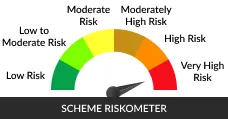
Axis Large Cap Fund is classified as a very high-risk equity scheme because it invests primarily in stocks. Equity prices can rise or fall based on company earnings, valuations, interest rates, global events, liquidity conditions, and investor sentiment.Within equity categories, large-cap funds may generally be less volatile than mid-cap and small-cap funds, but they can still experience meaningful declines during market corrections. Investors should be prepared for short-term ups and downs.
Axis Large Cap Fund is classified as very high risk because it invests mainly in equities. Even large and established companies are affected by stock market movements, earnings expectations, valuation changes, and macroeconomic developments.The risk classification helps investors understand that the fund is meant for long-term wealth creation goals, not for capital protection or short-term parking of money.
The main risks in Axis Large Cap Fund include market risk, valuation risk, sector concentration risk, stock-specific risk, and liquidity-related risks that may arise in unusual market conditions. Since it invests in equities, the NAV can move up or down based on market and company-level developments.Large-cap companies may be more established, but they are still affected by earnings cycles, policy changes, competition, global events, and investor sentiment.
If markets fall after investing, the NAV of Axis Large Cap Fund may decline. This is a normal possibility in equity investing, even in large-cap funds.Investors should avoid judging a long-term investment only by short-term market movements. The more relevant question is whether the fund still fits the investor’s goal, time horizon, and risk appetite.
Stopping SIPs during volatility may interrupt the discipline that SIPs are designed to create. When markets fall, SIP installments can buy more units at lower NAVs, although this does not guarantee future gains.Investors should review their financial situation, asset allocation, and goal horizon before making changes. If the long-term goal remains unchanged, continuing SIPs may help maintain investment discipline.
Investors should ideally consider Axis Large Cap Fund with a long-term horizon, preferably five years or more. A longer horizon gives the portfolio more time to benefit from business growth and recover from market downturns.Short investment periods can increase the chance of experiencing weak or negative returns due to market volatility. This is why large-cap funds are better suited for long-term financial goals than short-term cash needs.
Axis Large Cap Fund is not suitable for short-term investment. Since it invests in equities, its NAV can fluctuate over short periods.Money needed in the next few months or couple of years may be better placed in lower-risk categories, depending on the investor’s liquidity needs and risk profile. Axis Large Cap Fund is better aligned with long-term goals where investors can stay invested through market cycles.
Returns from Axis Large Cap Fund are market-linked and will vary across periods. The fund may benefit when large-cap companies grow earnings and equity markets are supportive, but it can also go through phases of underperformance or decline.Investors should avoid making decisions based only on recent returns. It is more useful to assess whether the fund’s large-cap strategy, risk level, and investment horizon match the investor’s financial goals.
Axis Large Cap Fund may be suitable for long-term wealth creation for investors who want exposure to established businesses with potential for steady compounding. Large-cap companies can benefit from scale, strong market positions, brand strength, and operating efficiency.Long-term wealth creation is not guaranteed. It depends on market conditions, company fundamentals, valuation discipline, portfolio construction, and investors’ ability to remain invested during challenging phases.
Axis Large Cap Fund can help investors participate in long-term equity growth, which may help counter the impact of inflation over time. Equities have the potential to grow with corporate earnings and economic expansion.However, inflation-beating returns are not assured. Investors should view the fund as part of a diversified long-term portfolio instead of treating it as a guaranteed inflation-protection product.
Axis Large Cap Fund may be considered for retirement planning by investors who have a long investment horizon and want equity exposure through large-cap companies. It can form part of the growth allocation in a retirement portfolio.Investors closer to retirement should be careful with equity exposure. Money needed for near-term withdrawals may require lower-risk investments, while equity funds may be used for the portion meant for long-term growth.
Axis Large Cap Fund may be considered for child education planning if the goal is several years away and the investor is comfortable with equity risk. A long horizon gives the investment more time to move through market cycles.As the education goal approaches, investors may gradually reduce exposure to equity funds and shift money toward relatively stable options. This can help reduce the risk of a market fall close to the time the funds are required.
Axis Large Cap Fund may be considered as a core equity holding by investors who want long-term exposure to established companies. Large-cap funds are often used as the foundation of an equity portfolio because they offer exposure to relatively stronger and more liquid businesses.Whether it should be a core holding depends on the investor’s overall asset allocation, financial goals, risk appetite, and existing portfolio. Investors should avoid concentrating their entire portfolio in one scheme or one category.
Yes, Axis Large Cap Fund can be part of a diversified portfolio. It may complement mid-cap, small-cap, flexi-cap, hybrid, debt, or other categories depending on the investor’s financial goals and risk profile.A diversified portfolio should balance growth, stability, liquidity, and risk. Large-cap exposure can provide an equity foundation, but investors should still review overall sector, category, and fund overlap.
Axis Large Cap Fund invests predominantly in large-cap companies, while a mid-cap fund invests mainly in mid-sized businesses. Large-cap companies are usually more established, more liquid, and more widely researched.Mid-cap funds may offer higher growth potential, but they can also be more volatile. Axis Large Cap Fund may suit investors seeking relatively steadier equity exposure compared with a dedicated mid-cap fund.
Axis Large Cap Fund focuses on large, established companies, while small-cap funds invest mainly in smaller companies that may be at an earlier stage of growth. Small-cap funds can offer higher growth potential but usually come with higher volatility and liquidity risk.A large-cap fund may be more suitable as a core equity allocation for many investors, while small-cap funds are often used as higher-risk satellite allocations within a diversified portfolio.
Axis Large Cap Fund predominantly invests in large-cap companies. A multicap fund invests across large-cap, mid-cap, and small-cap companies with required exposure to each segment.Investors who want focused exposure to established companies may consider a large-cap fund. Investors who want broader market-cap participation in a single fund may consider a multicap fund, while accepting the additional volatility that mid and small-cap exposure may bring.
Axis Large Cap Fund has a defined focus on large-cap companies. A flexi-cap fund has the flexibility to invest across large-cap, mid-cap, and small-cap companies without a fixed allocation to any one segment.This means Axis Large Cap Fund offers clearer large-cap exposure, while a flexi-cap fund gives the fund manager more freedom to shift market-cap allocation based on opportunities and risk.
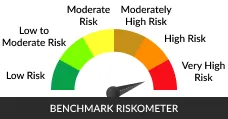
Axis Large Cap Fund is benchmarked against the BSE 100 TRI. This benchmark represents a broad large-cap-oriented equity universe and provides a relevant reference for evaluating the fund’s performance.Benchmark comparison should be viewed over meaningful long-term periods. A fund may outperform or underperform at different times because of stock selection, sector exposure, valuation choices, expenses, and market conditions.
TRI stands for Total Returns Index. It includes both price changes and dividends from the companies in the index.For mutual fund comparison, TRI is more appropriate than a price-only index because mutual fund returns also reflect dividends received by the portfolio. Still, the benchmark is only a reference point and not a guaranteed return.
Axis Large Cap Fund aims to build a portfolio of large-cap companies selected through bottom-up research. The fund focuses on business quality, sustainable earnings growth, corporate governance, cash flows, and risk management.The portfolio may include companies that are market leaders as well as large companies that are gaining share through competitive advantages. This approach seeks long-term capital appreciation, but it remains subject to equity market risk.
Stock selection matters because not all large-cap companies perform the same way. Even within established businesses, there can be differences in earnings growth, management quality, valuation comfort, balance-sheet strength, and sector outlook.A disciplined stock selection process helps identify companies with better long-term potential. It also helps avoid large companies that may look stable but face structural business or valuation challenges.
Yes, Axis Large Cap Fund is valuation-sensitive because the price paid for a stock can influence future return potential. Even high-quality companies may deliver disappointing returns if bought at very expensive valuations.Valuation should not be used as the only timing tool. Investors should combine valuation awareness with long-term goals, SIP discipline, asset allocation, and risk comfort.
Standard deviation measures how much a fund’s returns have fluctuated around its average return. A higher standard deviation usually indicates a more volatile investment journey.For Axis Large Cap Fund, standard deviation helps investors understand return variability. It should be compared with similar large-cap funds and read along with the investor’s time horizon, risk appetite, and overall portfolio.
Beta measures how sensitive a fund is to movements in its benchmark. A beta below 1 generally suggests that the fund has moved less sharply than the benchmark, while a beta above 1 suggests higher sensitivity.Beta is useful for understanding market-linked risk, but it does not capture every kind of risk. It does not fully explain valuation risk, stock-specific risk, sector concentration, or future changes in portfolio behaviour.
Sharpe Ratio measures how much return a fund has generated for each unit of risk taken. A higher Sharpe Ratio generally indicates better risk-adjusted performance over the measured period.Investors should compare Sharpe Ratio with similar funds and over suitable time frames. It should not be used alone because past risk-adjusted performance may not continue in the future.
R-Square indicates how closely a fund’s performance has moved in relation to its benchmark. A higher R-Square means the fund’s movements have historically been more closely explained by benchmark movements.For investors, R-Square can help show whether the fund behaves broadly like its benchmark or is more influenced by active portfolio choices. It should be read along with beta, portfolio composition, and the fund’s investment style.
Portfolio turnover shows how frequently the fund buys and sells securities. A higher turnover may indicate more active portfolio changes, while a lower turnover may suggest a longer holding approach.In a large-cap fund, turnover can be influenced by valuations, earnings outlook, sector rotation, risk management, and fund manager views. It should not be judged in isolation. The key question is whether portfolio changes are aligned with the fund’s stated strategy.
Expense ratio is the annual cost charged by the fund for managing the scheme. It is deducted from the scheme’s assets and reflected in the NAV.A lower expense ratio can help improve net returns, but cost should not be the only selection factor. Investors should also evaluate investment approach, risk profile, portfolio quality, consistency, and suitability for their goals.
Axis Large Cap Fund is an equity-oriented mutual fund for tax purposes. If units are redeemed within 12 months, gains are treated as short-term capital gains and taxed at the applicable equity STCG rate.If units are held for more than 12 months, gains are treated as long-term capital gains. Long-term gains above the annual exemption limit are taxed at the applicable equity LTCG rate. Tax rules can change, so investors should consult a tax advisor for their personal situation.
Each SIP installment is treated as a separate purchase for tax purposes. When units are redeemed, the holding period is calculated separately for each installment.This means older SIP units may qualify as long-term while newer units may still be short-term at the time of redemption. Redemptions are generally considered using the first-in, first-out method, where older units are treated as sold first.
No, Axis Large Cap Fund is not an ELSS or tax-saving mutual fund. Investments in this scheme do not qualify for deduction under Section 80C.Investors looking specifically for tax-saving mutual funds may consider ELSS schemes, subject to the lock-in period, risk profile, and overall financial plan.
Axis Large Cap Fund may be considered by investors who want equity exposure through established large-cap companies during uncertain markets. Large-cap stocks may offer relatively better liquidity and business visibility compared with smaller companies.However, uncertain markets can affect all equity funds. Investors should avoid using market timing as the only decision factor and should invest based on goals, horizon, and risk comfort.
Investors can invest in Axis Large Cap Fund through the Axis Mutual Fund website, mobile app, authorised distributors, registered investment advisers, mutual fund platforms, or other eligible channels.Before investing, investors should complete KYC, choose the appropriate plan and option, read the scheme-related documents, understand the risk factors, and ensure that the fund matches their long-term investment objective.
Invest Now